The Machine Question is an independent research project exploring artificial intelligence through philosophy, technology and human cognition. Essays on intelligence, creativity and the evolving relationship between humans and machines.
The Structure of Intelligence
The Machine Question
Artificial intelligence is not merely a technological revolution. It is a question about intelligence itself.
Essays exploring human cognition, machine intelligence, creativity and the systems shaping the future of knowledge.
Begin the inquiry →
The Question
What happens when intelligence becomes something we can design?
Artificial intelligence is forcing humanity to reconsider one of its oldest assumptions: that intelligence belongs exclusively to biological minds.
01
Capability
What can a machine do?
Observable performance is the first threshold: reasoning, learning, predicting, creating and acting in increasingly complex environments.
02
Understanding
What does the machine understand?
Producing a correct response is not necessarily the same as grasping what that response means. The distance between performance and understanding remains unresolved.
03
Meaning
What changes for us?
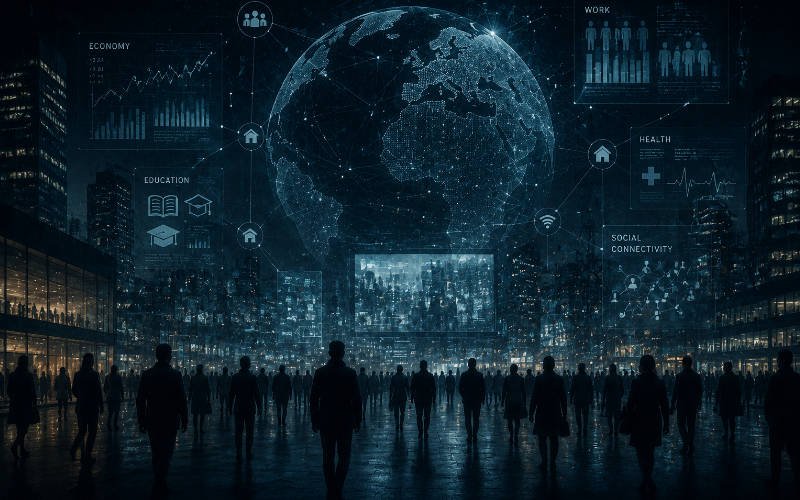
Artificial intelligence alters the categories through which humans interpret knowledge, agency, authorship and ultimately their own place in the world.
Fields of Inquiry
Six perspectives
Six perspectives
on the transformation
of intelligence.
The Machine Question explores artificial intelligence through six interconnected fields examining intelligence, language, creativity, knowledge, power and the human condition.
01
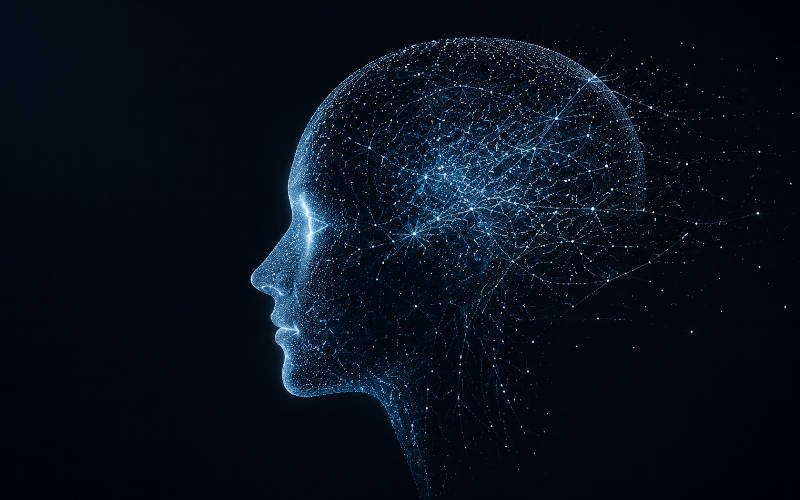

Intelligence
What makes a system intelligent?
Exploring reasoning, learning and the boundaries between computation and understanding.
Explore Intelligence 02Language
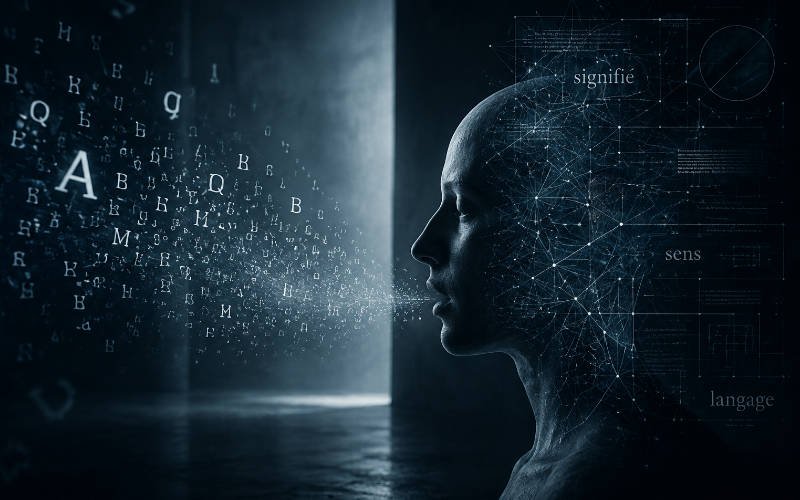
Can machines create meaning?
Investigating the relationship between language, symbols and human interpretation.
Explore Language 03Creativity
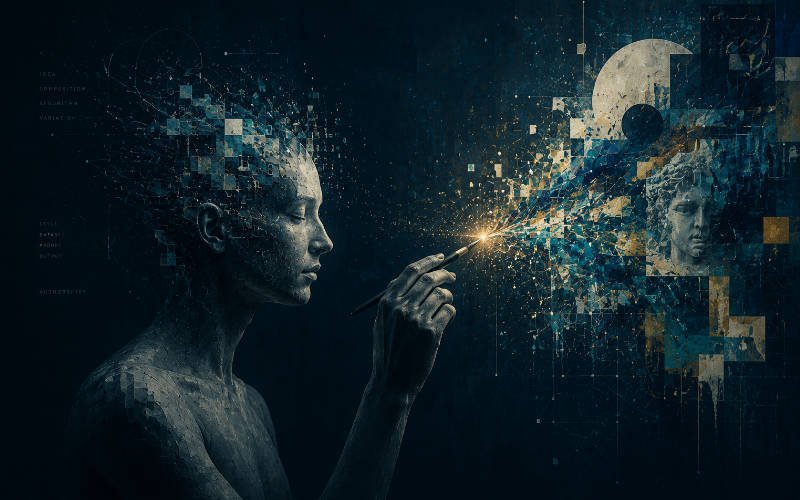
Who is the author of a machine creation?
Examining originality, authorship and creativity in the age of generative systems.
Explore Creativity 04Knowledge
What does it mean for a machine to know?
Examining information, truth, justification, understanding and epistemic authority.
Explore Knowledge 05Power
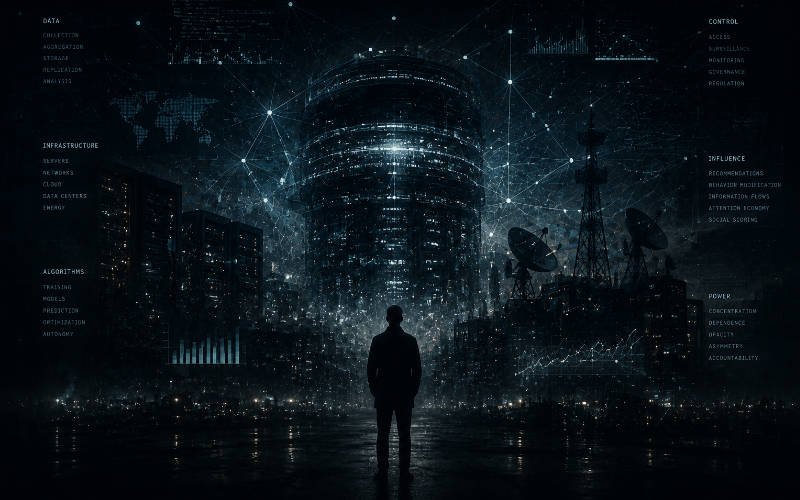
Who controls artificial intelligence?
Understanding infrastructure, ownership, access, standards and technological dependency.
Explore Power 06Humanity
What remains uniquely human?
Examining consciousness, embodiment, identity, agency and the human condition.
Explore HumanitySelected Investigations
Essays exploring the architecture of intelligence.
Long-form essays examining artificial intelligence through philosophy, technology, society and human cognition.
01
Intelligence
The Machine Question: Why Artificial Intelligence Changes the Meaning of Intelligence
AI does not only create new machines. It forces us to reconsider what intelligence has always meant.
02
Language
The Language Machine: When Words Become Computational Objects
Large language models challenge the boundary between information, meaning and understanding.
03
Creativity
Artificial Creativity: The Future of Human Authorship
Generative systems are changing our perception of originality, creation and artistic value.

Intelligence as a Social System
Artificial intelligence is not merely a technological capability. Its development depends on control over compute, data, models and the institutions that decide what counts as knowledge, intelligence and authority. This essay examines AI as a social system in which technology, economic interests and symbolic power become structurally inseparable.

The Human Boundary
As machines acquire capacities once treated as uniquely human, the boundary of personhood becomes harder to defend through intelligence, language or creativity alone. This essay asks whether what matters instead lies in consciousness, continuity, responsibility and the relational practices through which persons are recognised.

Creativity After Generative AI
When machines can generate images, texts and music, the old idea of creativity as the expression of a single author begins to fracture. This essay traces that fracture through Kant, Barthes, Foucault, Boden and Dickie, asking what remains once generation, intention and institutional recognition no longer coincide.
The Language Problem
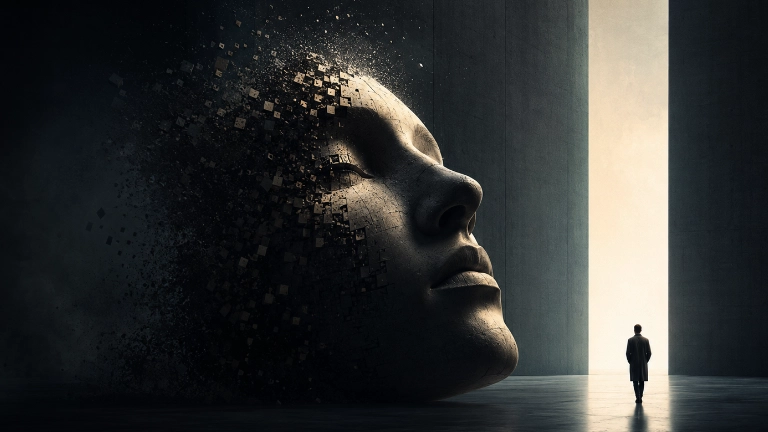
Language models can master linguistic structure and participate in human linguistic practice. Whether their words refer to anything beyond that structure is a different question.

The Architecture of Intelligence
Understanding does not emerge at the end of a cognitive pipeline. Perception, memory, representation, language, inference, learning and context continuously constrain one another. This essay examines that architecture and proposes a different way to evaluate intelligence in humans and artificial systems.

The Machine Question
Artificial intelligence does not simply create new machines. It forces us to reconsider what intelligence means, how we define understanding, and which assumptions about human cognition remain valid in an age of artificial systems.

The Knowledge Map
Concepts shaping the machine question.
A conceptual framework connecting artificial intelligence with the deeper structures of knowledge, creativity and human experience.
01
Artificial Intelligence
Systems, models and architectures that simulate cognitive abilities.
02Large Language Models
Language prediction, representation and the emergence of machine reasoning.
03Human Cognition
Memory, perception, reasoning and the architecture of thought.
04Machine Creativity
Authorship, originality and the changing nature of creation.
05Knowledge Systems
How information becomes knowledge in human and artificial systems.
06Human Agency
Decision, responsibility and the relationship between humans and machines.